


“The body holds the story — and so does the clinician who never got enough support learning how to sit with it..”
— Erica K. Smith, MSW, LCSW, C-DBT

The Why
I’m a North Carolina native, licensed clinical social worker, trauma therapist, and consultant.
My work centers people who have been asked—explicitly or implicitly—to adapt to systems that were never designed with them in mind.
Much of what I specialize in grew out of lived experience, not just training.
In 2003, when I was 12 years old, I was diagnosed with Rheumatoid Arthritis and later hospitalized. That same year, I was diagnosed with Lupus (Systemic Lupus Erythematosus). It was also the year my father died suddenly in a car accident. In adulthood, my medical reality expanded again with a diagnosis of Interstitial Lung Disease (ILD).
Living with chronic illness for more than 20 years—and living as a Black woman for my entire life—taught me how quickly “normal” becomes code for adapt quietly or be left out.
I learned how to plan my day around energy limits.
How to research buildings before entering them.
How to anticipate stairs.
How to minimize microaggressions before I ever had language to name them.
How to advocate for myself long before systems ever considered changing.
Eventually, I realized something important:
What I had normalized was not universal—and it didn’t have to be the standard.
That realization changed how I practice, how I teach, and how I consult.
The Work & Credibility
I've worked as a social worker for over a decade, with a clinical focus on trauma — particularly interpersonal violence, racial trauma, chronic and invisible illness, and systemic harm.
I'm the founder of Whole Mentality, a group therapy practice based in Raleigh, North Carolina, built around accessibility, sustainability, and community care. What began as a solo practice has grown into a team-based model with multiple therapists, serving clients across insurance panels and self-pay.
My work outside the therapy room includes:
EMDR Consultation — I am an EMDRIA Approved Consultant, which means I've met the clinical hours, training, and peer review requirements set by the EMDR International Association to consult with other clinicians. I offer individual, group, and package consultation for EMDR-trained therapists working toward certification or deepening their practice. This is work I take seriously — because EMDR done well requires more than completing a training.
Speaking & Training — I partner with mental health organizations, conferences, and leadership teams on topics at the intersection of EMDR clinical practice, trauma-informed systems, and equity in mental health spaces. I don't do keynotes that make people feel good and change nothing. I aim for something more useful than that.
Clinical Supervision — I provide clinical supervision for Licensed Clinical Social Work Associates (LCSWAs) in North Carolina. I currently supervise 10 clinicians and bring the same directness to supervision that I bring to everything else: honest feedback, real clinical conversation, and zero tolerance for the kind of supervision that just logs hours.
I especially enjoy working outside the therapy room — supporting clinicians, organizations, and systems that are trying (sometimes clumsily, sometimes earnestly) to do better than what they inherited.
Credentials at a Glance
Licensure Licensed Clinical Social Worker (LCSW) — North Carolina C010767 Ex. 05/12/2028
EMDR EMDRIA Approved Consultant & EMDR Certified Therapist
Additional Certifications Certified DBT Clinician (C-DBT), Pain Reprocessing Therapy (PRT)
Education Master of Social Work (MSW)
Professional Memberships EMDR International Association (EMDRIA), Inclusive Therapists


Current Capacity
EMDR Consultation: Accepting individual and group consultees
EMDR Consultees: Accepting ~3 more certified EMDR Therapists working towards their Approved Consultation status
Clinical Supervision: Accepting LCSWAs in North Carolina (capacity for 3 additional supervisees)
Speaking & Training: Accepting inquiries for 2026–2028
Where I Stand
A positionality statement isn't a disclaimer. It's an acknowledgment that who I am shapes how I practice, consult, and teach — and that pretending otherwise isn't neutrality, it's just dishonesty with better PR.
I am a Black woman, a small business owner, and someone who has lived with multiple chronic illnesses for over two decades. These are not incidental details. They are the lens through which I understand trauma, systems, and the humans navigating both.
Erica Kendra, LLC is grounded in the following:
Inclusion, accessibility, and equity are not values I perform — they are operational commitments that show up in how I price my services, who I partner with, how I structure my spaces, and what I'm willing to say out loud.
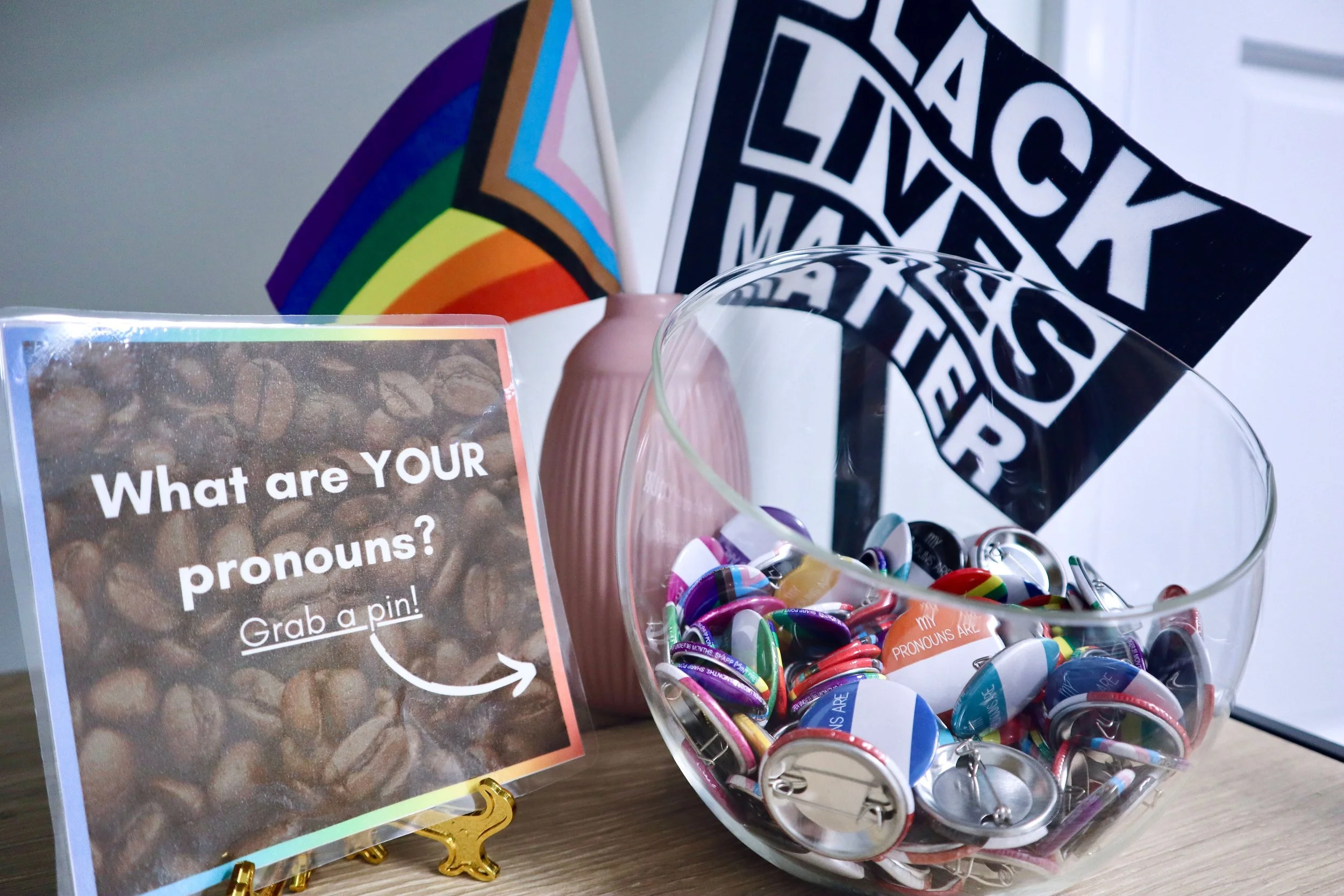
I am queer allied. I am committed to affirming spaces for people of all races, abilities, bodies, gender identities, sexual orientations, cultures, and backgrounds. I am continuously unlearning what I was taught to normalize — and I do not expect that work to be finished.
I believe in accountability without performance. I am not interested in DEI as optics. I am interested in what actually changes.
If my positionality creates alignment with your values — I'm glad you're here. If it raises questions — I'd rather you ask them than wonder.
Values & Voice
I don’t believe in neutral care.
I don’t believe equity can be performative.
And I don’t believe that burnout is a personal failure.
My work is informed by:
Trauma-focused and somatic practice
Anti-oppressive and abolitionist frameworks
Lived experience with chronic illness and systemic harm
A deep belief that accessibility includes us, too
I help people and organizations move beyond accommodation as an afterthought and toward systems that actually serve the humans inside them.
This means telling the truth—even when it’s uncomfortable.
It means naming harm without shaming.
And it means building practices, policies, and cultures that don’t require people to disappear parts of themselves just to belong.
If you’re looking for polished language without accountability, I may not be the right fit.
If you’re looking for work that is thoughtful, grounded, and honest—I’m glad you’re here.