

 Image 1 of 1
"Where do we even start?"
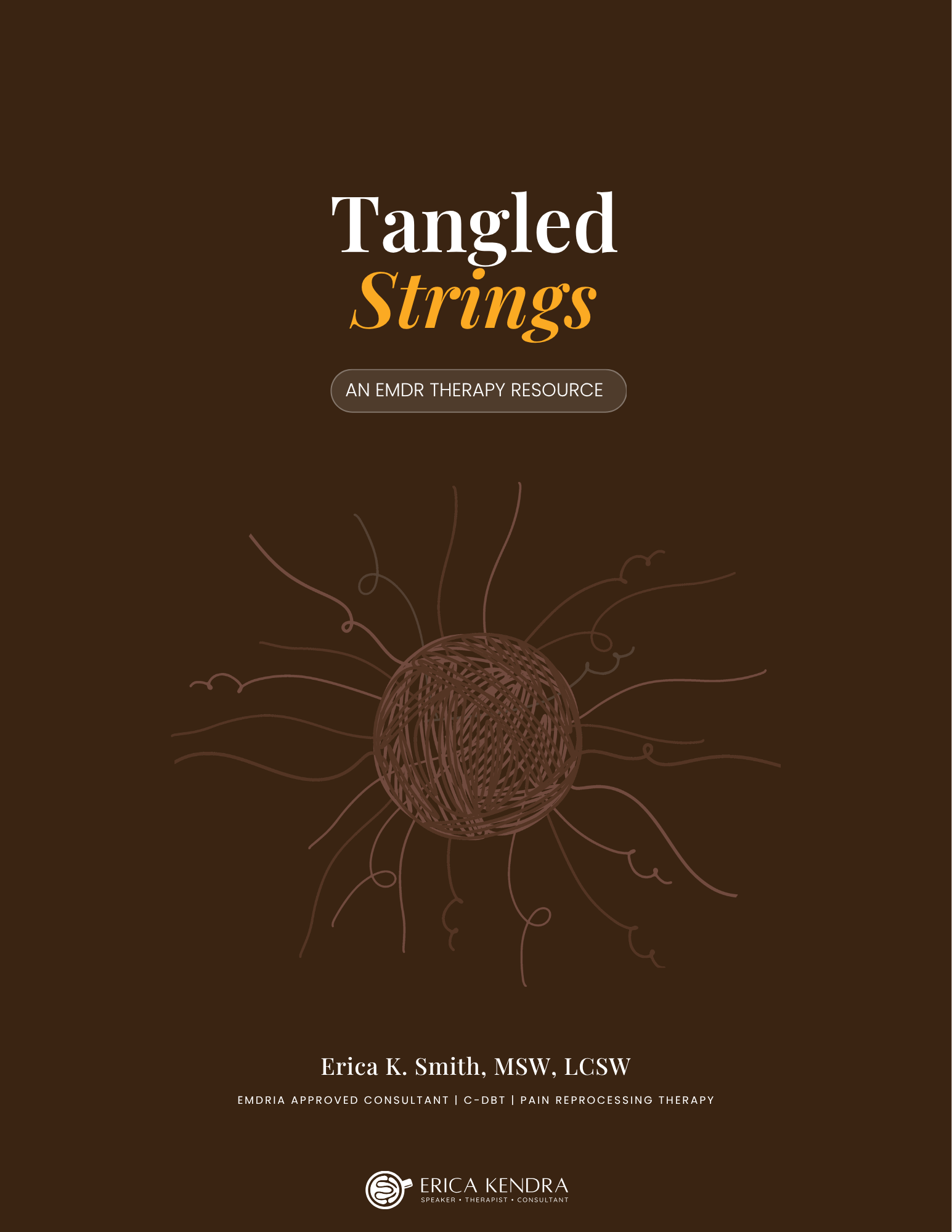
It's the question almost everyone arrives with, and the honest answer is that trauma doesn't sort itself into a neat line. It's tangled. Several strings of yarn knotted together, wound around each other until it's hard to see where one ends and the next begins.
Tangled Strings is a six-page illustrated worksheet that makes that visible. It explains, in plain language, why EMDR doesn't always start where you'd expect, why some strings are short and some are long, why pulling one is sometimes the only way to find the next, and why not knowing where to begin is normal rather than a sign something is wrong.
What's inside
The metaphor, explained in everyday language
A worked example, so nobody has to guess what "labeling your strings" means
A full-page tangle to label with your own
Five reflection prompts with room to write
A page on how to work with Erica, and what to do if the exercise stirs something up
Who it's for
Written for the person in therapy — for anyone preparing for EMDR, in the middle of it, or wondering whether to start.Therapists: this one's for you to give away. Print it, use it in session, send it home between appointments. It's been handed out in my own practice since 2023 and it does its best work as something you put on the table rather than something you explain. No attribution needed beyond what's already printed on it.
Six pages. Print-ready PDF. Free.
Developed by Erica K. Smith, MSW, LCSW — trauma therapist and EMDRIA Approved Consultant. This resource is educational and is not a substitute for therapy with a licensed professional.
"Where do we even start?"
It's the question almost everyone arrives with, and the honest answer is that trauma doesn't sort itself into a neat line. It's tangled. Several strings of yarn knotted together, wound around each other until it's hard to see where one ends and the next begins.
Tangled Strings is a six-page illustrated worksheet that makes that visible. It explains, in plain language, why EMDR doesn't always start where you'd expect, why some strings are short and some are long, why pulling one is sometimes the only way to find the next, and why not knowing where to begin is normal rather than a sign something is wrong.
What's inside
The metaphor, explained in everyday language
A worked example, so nobody has to guess what "labeling your strings" means
A full-page tangle to label with your own
Five reflection prompts with room to write
A page on how to work with Erica, and what to do if the exercise stirs something up
Who it's for
Written for the person in therapy — for anyone preparing for EMDR, in the middle of it, or wondering whether to start.Therapists: this one's for you to give away. Print it, use it in session, send it home between appointments. It's been handed out in my own practice since 2023 and it does its best work as something you put on the table rather than something you explain. No attribution needed beyond what's already printed on it.
Six pages. Print-ready PDF. Free.
Developed by Erica K. Smith, MSW, LCSW — trauma therapist and EMDRIA Approved Consultant. This resource is educational and is not a substitute for therapy with a licensed professional.