

 Image 1 of 1
Phase 1 and Phase 2 are not two separate phases. They're intertwined — and if you've ever finished an intake wondering whether you actually prepared this person or just collected their history, this is the tool for that.
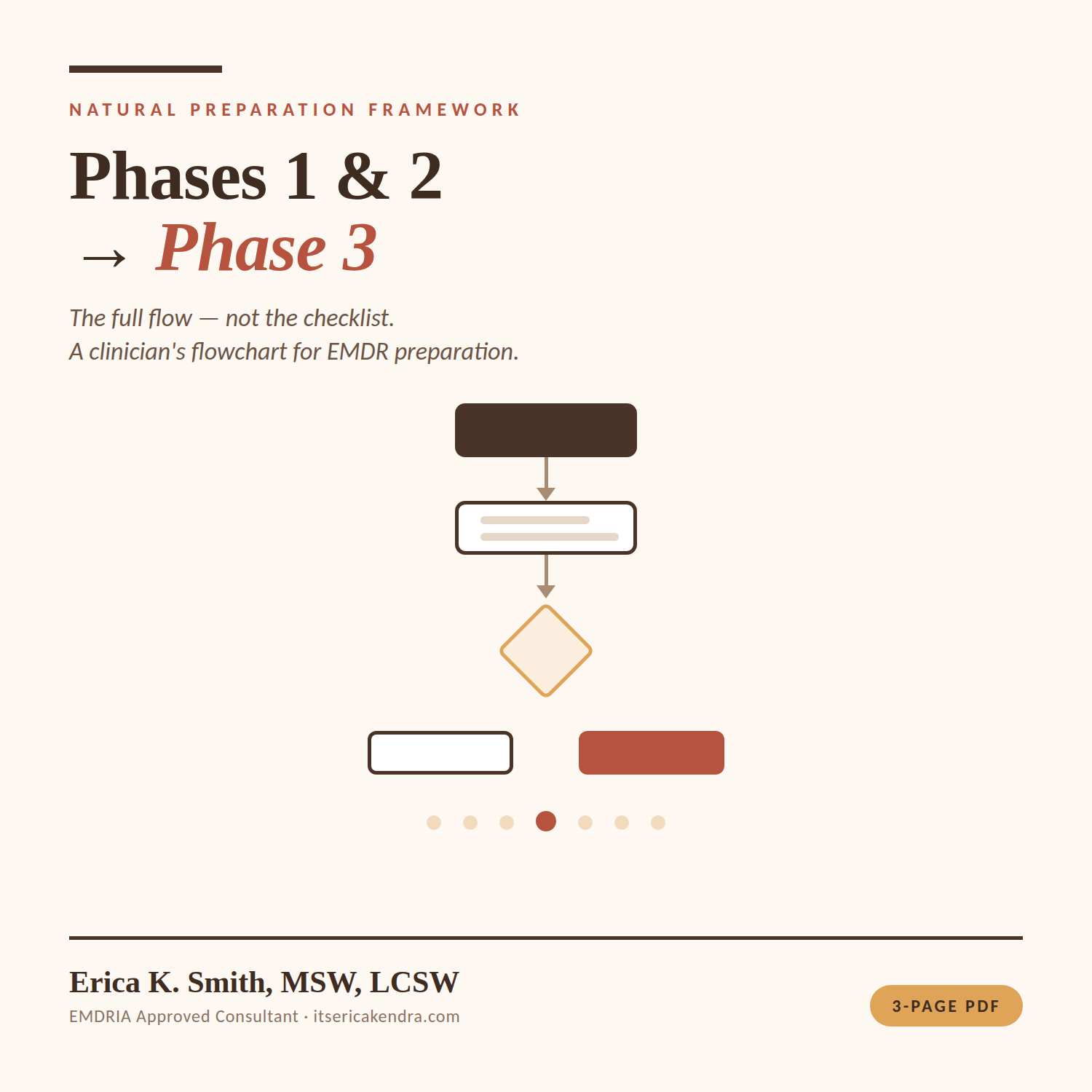
The Natural Preparation Flowchart maps the entire path from a first history-taking session to a first reprocessing session — every step, every decision point, and the clinical reasoning behind each one. It's the more robust companion to the Natural Preparation Toolkit, and the first resource in the set that covers Phase 1.
What's in it:
The "walk me through your day — in detail" technique for clients who swear they have no coping skills (they do)
Bilateral stimulation selection with the accessibility questions to ask before you're mid-session
Why guided exercises land harder when you run them at the moment distress arrives on its own — not in a scheduled resourcing session
When to introduce containment (hint: not on a schedule)
The decision point most of us skip: did this resource actually produce relief for this person — and what to do when it didn't
The Phase 3 worksheet walk-through, using a low-stakes personal example, the week before the first reprocessing session
"Getting our feet wet" target screening — and the caution that a smaller target is not permission to move faster
The preparedness signals that tell you it's time, and what to do when they aren't there yet
Format: 3-page print-ready PDF. Decision points, clinical notes, and phase markers are visually distinct so you can find what you need mid-session.
Built for EMDR-trained clinicians. Useful whether you're working toward EMDRIA certification, supervising, or you've been doing this a while and want to see how someone else moves through it.
Developed by Erica K. Smith, MSW, LCSW — EMDRIA Approved Consultant, C-DBT, Pain Reprocessing Therapy trained. AI-assisted, human-curated.
Phase 1 and Phase 2 are not two separate phases. They're intertwined — and if you've ever finished an intake wondering whether you actually prepared this person or just collected their history, this is the tool for that.
The Natural Preparation Flowchart maps the entire path from a first history-taking session to a first reprocessing session — every step, every decision point, and the clinical reasoning behind each one. It's the more robust companion to the Natural Preparation Toolkit, and the first resource in the set that covers Phase 1.
What's in it:
The "walk me through your day — in detail" technique for clients who swear they have no coping skills (they do)
Bilateral stimulation selection with the accessibility questions to ask before you're mid-session
Why guided exercises land harder when you run them at the moment distress arrives on its own — not in a scheduled resourcing session
When to introduce containment (hint: not on a schedule)
The decision point most of us skip: did this resource actually produce relief for this person — and what to do when it didn't
The Phase 3 worksheet walk-through, using a low-stakes personal example, the week before the first reprocessing session
"Getting our feet wet" target screening — and the caution that a smaller target is not permission to move faster
The preparedness signals that tell you it's time, and what to do when they aren't there yet
Format: 3-page print-ready PDF. Decision points, clinical notes, and phase markers are visually distinct so you can find what you need mid-session.
Built for EMDR-trained clinicians. Useful whether you're working toward EMDRIA certification, supervising, or you've been doing this a while and want to see how someone else moves through it.
Developed by Erica K. Smith, MSW, LCSW — EMDRIA Approved Consultant, C-DBT, Pain Reprocessing Therapy trained. AI-assisted, human-curated.